

When the Water Rises, It Remembers What We Threw Away
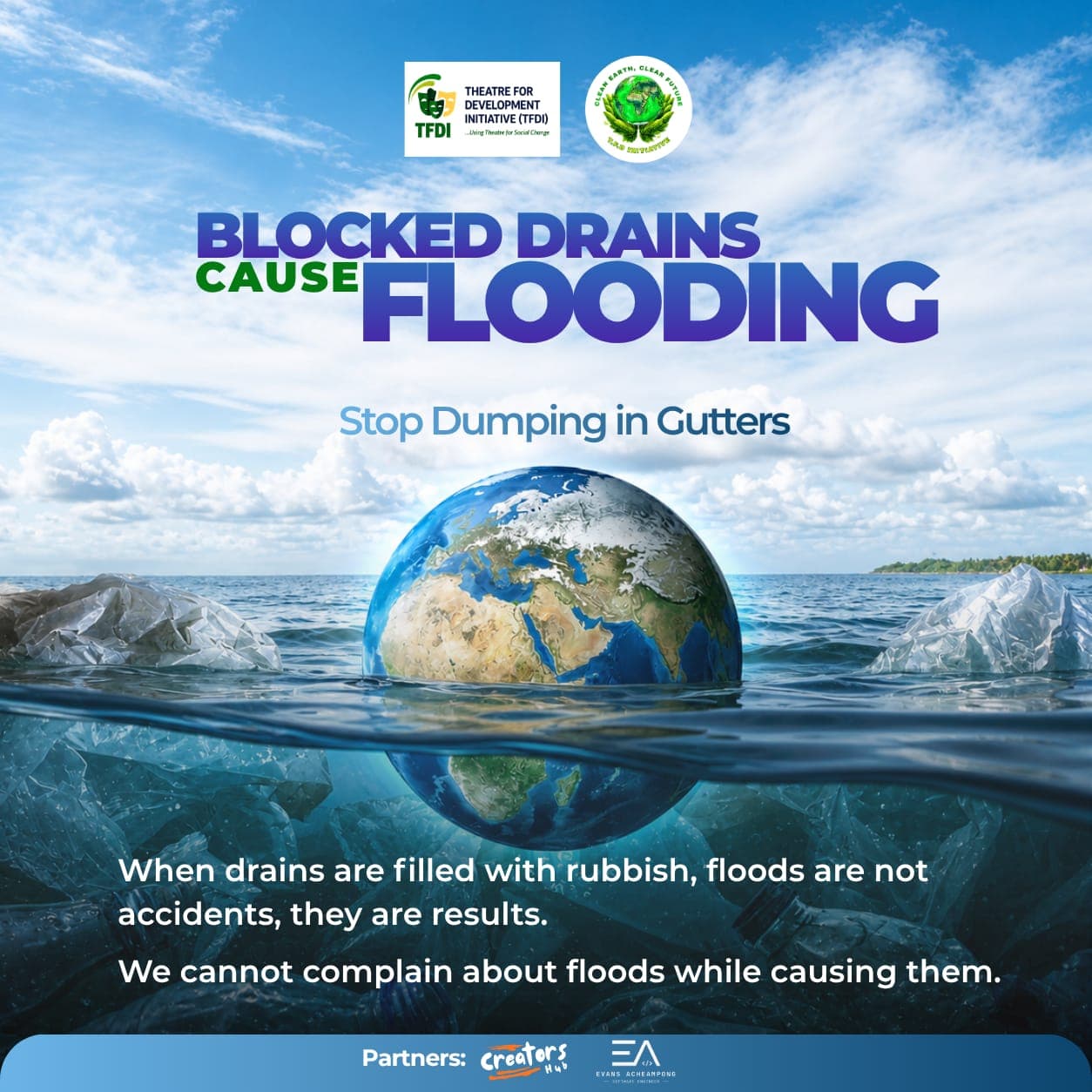
There’s something deeply unsettling about the image of the Earth half-submerged in water—surrounded by floating plastic, struggling to breathe beneath a surface we polluted. It feels distant, almost symbolic… until the rains come.
There’s something deeply unsettling about the image of the Earth half-submerged in water—surrounded by floating plastic, struggling to breathe beneath a surface we polluted. It feels distant, almost symbolic… until the rains come.
Then it becomes real.
In many of our communities, flooding is no longer a rare disaster. It is becoming a predictable season. Streets turn into rivers. Homes fill with water. Lives are disrupted—sometimes lost. And yet, beneath every flood lies a quieter truth we often avoid:
Floods are not always accidents. Sometimes, they are consequences.
The Journey of a Plastic Bag
It starts small.
A sachet of water tossed aside. A plastic bag dropped into a gutter. A pile of waste swept into a drain “just to clear the front of the house.”
It disappears from sight—but not from existence.
When rain falls, that same waste begins a journey. It gathers with others, forming invisible blockades beneath the surface. Drains that were meant to carry water away become clogged arteries. The system fails.
And when it fails, the water has nowhere to go… except back to us.
When Drains Are Blocked, Nature Responds
Water does not argue. It does not negotiate.
It simply follows the path available to it.
Blocked drains force water into our streets, our homes, our shops. What we experience as “flooding” is often just water reclaiming space that we unknowingly took from it.
And the damage goes beyond inconvenience:
Property is destroyed. Roads become unsafe. Diseases spread quickly in contaminated water. Families are displaced overnight.
What hurts the most is that many of these outcomes are preventable.
The Hard Truth We Must Face
We cannot complain about floods while contributing to them.
It’s a difficult truth—but an important one.
Blaming the government, the system, or the weather alone ignores the everyday actions that build up into major problems. Yes, infrastructure matters. Yes, policies matter. But so do habits.
Every piece of waste dumped into a gutter is a small decision with a large consequence.
Changing the Story, One Habit at a Time
Imagine a different reality.
Clean gutters. Free-flowing drains. Rainwater moving smoothly through systems designed to carry it away. Communities prepared—not panicking—when the rains arrive.
This vision is not impossible. It starts with simple, consistent actions:
Dispose of waste properly. Avoid dumping in gutters, no matter how convenient it seems. Participate in community clean-up efforts. Educate others, especially the younger generation.
Change does not begin with grand gestures. It begins with daily discipline.
A Collective Responsibility
The message is clear:
Blocked drains cause flooding.
But behind that statement is a deeper call—for responsibility, for awareness, and for change.
We are not powerless in the face of environmental challenges. In fact, we are central to both the problem and the solution.
Final Reflection
The next time the sky darkens and the rain begins to fall, ask yourself:
Where will the water go?
Because the answer depends, in part, on what we chose to do yesterday.
Let’s stop dumping in gutters.
Let’s stop creating the very disasters we fear.
Because when the water rises, it doesn’t forget.